Open Library
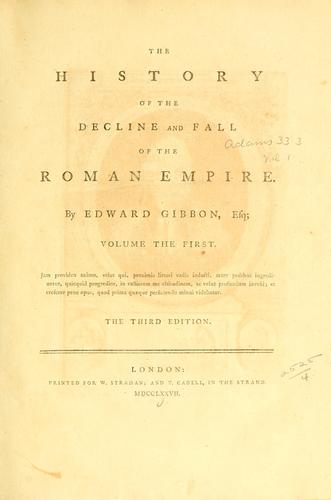
History of the Decline and Fall of the Roman Empire Complete and Unabridged
Open LibraryEdward Gibbon
Description
Gibbon's masterpiece, which narrates the history of the Roman Empire from the second century a.d. to its collapse in the west in the fifth century and in the east in the fifteenth century, is widely considered the greatest work of history ever written. This abridgment retains the full scope of the original, but in a compass equivalent to a long novel. Casual readers now have access to the full sweep of Gibbon's narrative, while instructors and students have a volume that can be read in a single term. This unique edition emphasizes elements ignored in all other abridgments--in particular the role of religion in the empire and the rise of Islam.From the Trade Paperback edition.
Codex Insight
Book Intelligence
Explore summaries, central ideas, meaningful passages, reading questions and a growing interpretation of this book.
This book has not been analysed yet.
Codex can generate a spoiler-free overview, full summary, central ideas, chapter structure, meaningful passages and reading questions from the indexed text.
Reading conversation
Talk with this book
Ask questions grounded in the indexed text, your saved notes, quotations and themes for History of the Decline and Fall of the Roman Empire Complete and Unabridged.
Begin a reading conversation
Try asking about a character, theme, difficult passage, philosophical question or one of your own saved annotations.
Reading
Library copies
Loading audio reader…
Preparing available voices and your saved reading position.
Add to library
Upload a book copy
Upload a file you own or are permitted to store. Supported formats include PDF, EPUB, text, Markdown, CSV and ZIP.
External links
Wisdom Engine
Discover passages worth keeping
Search the indexed primary text for reflective passages and send the strongest candidates to your curator's desk for review.
Your reading
Notes
No notes for this book yet.
Passages
Quotes
No quotes saved for this book yet.
Living knowledge
Connections
Related books

Stochastic calculus and financial applications
J. Michael Steele
Similarity: 0.901

A Time to Kill
John Grisham
Similarity: 0.898

Pioneers
Steve MacDonogh
Similarity: 0.892
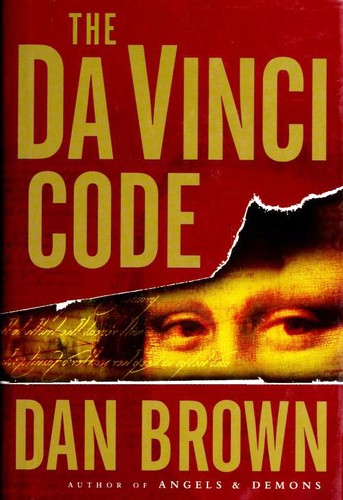
The Da Vinci Code
Dan Brown
Similarity: 0.889

Change we can believe in
Barack Obama
Similarity: 0.886

Brownian motion and stochastic calculus
Ioannis Karatzas
Similarity: 0.881
Related knowledge
Introduction to Algorithms | Electrical Engineering and Computer Science | MIT OpenCourseWare MIT OpenCourseWare This course is an introduction to mathematical modeling of computational problems, as well as common algorithms, algorithmic paradigms, and data structures used to solve these problems. It emphasizes the relationship between algorithms and programming and introduces basic performance measures and analysis techniques for these problems. https://ocw.mit.edu/courses/6-006-introduction-to-algorithms-spring-2020/
GitHub - mawady/awesome-computer-vision-resources: A structured learning reference for computer vision: from image fundamentals to research frontiers GitHub A structured learning reference for computer vision: from image fundamentals to research frontiers - mawady/awesome-computer-vision-resources https://github.com/mawady/awesome-computer-vision-resources
Under Crime and Punishment ustice extends far beyond the legal, court-based system. The novel primarily explores psychological justice, asserting that true retribution for moral transgressions is an inescapable, self-inflicted torment of guilt, while authentic redemption requires spiritual rebirth and suffering rather than mere legal punishment
MIT OpenCourseWare | Free Online Course Materials MIT OpenCourseWare MIT OpenCourseWare is a web based publication of virtually all MIT course content. OCW is open and available to the world and is a permanent MIT activity https://ocw.mit.edu/
AI & ChatGPT Courses Generative AI https://www.linkedin.com/feed/update/urn:li:groupPost:6731624-7458105740260577280/?utm_source=social_share_send&utm_medium=ios_app&rcm=ACoAAAjAjYsBU8DxE_HE298uJ8uo6Z6DuXaH3bo
The mystery of human existence lies not in just staying alive, but in finding something to live for. A central Dostoevsky theme: meaning, suffering, and moral responsibility. The Brothers Karamazov