
Open Library
Amerika
Open LibraryFranz Kafka
Description
"Franz Kafka's diaries and letters suggest that his fascination with America grew out of a desire to break away from his native Prague, even if only in his imagination. Kafka died before he could finish what he liked to call his ''American novel," but he clearly entitled it Der Verschollene ("The Missing Person") in a letter to his fiancee, Felice Bauer, in 1912. Kafka began writing the novel that fall and wrote the last completed chapter in 1914, but it wasn't until 1927, three years after his death, that Amerika - the title that Kafka's friend and literary executor Max Brod gave his edited version of the unfinished manuscript - was published in Germany by Kurt Wolff Verlag. An English translation by Willa and Edwin Muir was published in Great Britain in 1932 and in the United States in 1946." "Over the last thirty years, an international team of Kafka scholars has been working on German-language critical editions of all of Kafka's writings, going back to the original manuscripts and notes, correcting transcription errors, and removing Brod's editorial and stylistic interventions to create texts that are as close as possible to the way the author left them." "With the same expert balance of precision and nuance that marked his award-winning translation of The Castle, Mark Harman now restores the humor and particularity of language in his translation of the critical edition of Der Verschollene. Here is the story of young Karl Rossmann, who, following an incident involving a housemaid, is banished by his parents to America. With unquenchable optimism and in the company of two comic-sinister companions, he throws himself into misadventure after misadventure, eventually heading toward Oklahoma, where a career in the theater beckons. Though we can never know how Kafka planned to end the novel, Harman's superb translation allows us to appreciate, as closely as possible, what Kafka did commit to the page."--Jacket.
Codex Insight
Book Intelligence
Explore summaries, central ideas, meaningful passages, reading questions and a growing interpretation of this book.
This book has not been analysed yet.
Codex can generate a spoiler-free overview, full summary, central ideas, chapter structure, meaningful passages and reading questions from the indexed text.
Reading conversation
Talk with this book
Ask questions grounded in the indexed text, your saved notes, quotations and themes for Amerika.
Begin a reading conversation
Try asking about a character, theme, difficult passage, philosophical question or one of your own saved annotations.
Reading
Library copies
Loading audio reader…
Preparing available voices and your saved reading position.
Add to library
Upload a book copy
Upload a file you own or are permitted to store. Supported formats include PDF, EPUB, text, Markdown, CSV and ZIP.
External links
Wisdom Engine
Discover passages worth keeping
Search the indexed primary text for reflective passages and send the strongest candidates to your curator's desk for review.
Your reading
Notes
No notes for this book yet.
Passages
Quotes
No quotes saved for this book yet.
Living knowledge
Connections
Related books

Deep Learning
Ian Goodfellow
Similarity: 0.902

The deep learning revolution
Terrence J. Sejnowski
Similarity: 0.898
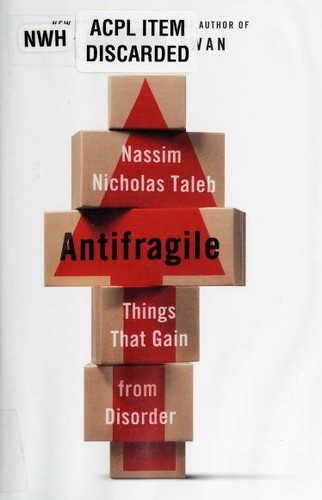
Antifragile
Nassim Nicholas Taleb
Similarity: 0.893

Things Fall Apart
Chinua Achebe
Similarity: 0.870
The Grand Design
Stephen Hawking
Similarity: 0.820

Brief Answers to the Big Questions
Stephen Hawking
Similarity: 0.807
Related knowledge
Introduction to Algorithms | Electrical Engineering and Computer Science | MIT OpenCourseWare MIT OpenCourseWare This course is an introduction to mathematical modeling of computational problems, as well as common algorithms, algorithmic paradigms, and data structures used to solve these problems. It emphasizes the relationship between algorithms and programming and introduces basic performance measures and analysis techniques for these problems. https://ocw.mit.edu/courses/6-006-introduction-to-algorithms-spring-2020/
GitHub - mawady/awesome-computer-vision-resources: A structured learning reference for computer vision: from image fundamentals to research frontiers GitHub A structured learning reference for computer vision: from image fundamentals to research frontiers - mawady/awesome-computer-vision-resources https://github.com/mawady/awesome-computer-vision-resources
Under Crime and Punishment ustice extends far beyond the legal, court-based system. The novel primarily explores psychological justice, asserting that true retribution for moral transgressions is an inescapable, self-inflicted torment of guilt, while authentic redemption requires spiritual rebirth and suffering rather than mere legal punishment
MIT OpenCourseWare | Free Online Course Materials MIT OpenCourseWare MIT OpenCourseWare is a web based publication of virtually all MIT course content. OCW is open and available to the world and is a permanent MIT activity https://ocw.mit.edu/
AI & ChatGPT Courses Generative AI https://www.linkedin.com/feed/update/urn:li:groupPost:6731624-7458105740260577280/?utm_source=social_share_send&utm_medium=ios_app&rcm=ACoAAAjAjYsBU8DxE_HE298uJ8uo6Z6DuXaH3bo
The mystery of human existence lies not in just staying alive, but in finding something to live for. A central Dostoevsky theme: meaning, suffering, and moral responsibility. The Brothers Karamazov